
How to Compare Football Teams with Different League Positions and Playing Records
Comparing two football teams is not always as straightforward as looking at the league table and deciding which one is stronger. A team sitting fourth may appear more impressive than another occupying tenth position, but the difference between them might not tell the complete story. Recent performances, quality of opponents, home and away records, goals scored and defensive strength can all influence how competitive a team really is.
This is particularly important when analysing football matches before making predictions. Teams competing in different positions can have very different playing records, yet their actual strengths may be closer than the standings suggest. A club near the bottom might be improving steadily, while a higher-ranked opponent could be struggling despite maintaining a respectable position.
Understanding how to compare football teams with different league positions and playing records requires looking beyond the numbers displayed on the table. It involves examining the circumstances behind those numbers and identifying the factors that explain each team's current performance.
How to Compare teams with Diverse League Positions and Playing Records
Understanding how to compare football teams with different league positions and playing records requires looking beyond the numbers displayed on the table. It involves examining the circumstances behind those numbers and identifying the factors that explain each team's current performance.
Understand What League Positions Actually Reveal
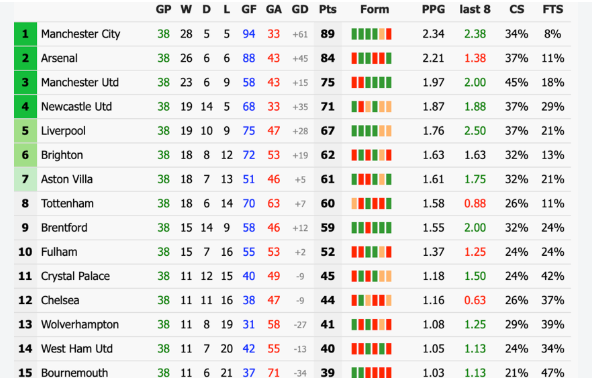
League positions provide a useful starting point when comparing football teams. They show how clubs have performed throughout a competition and offer an overview of their ability to collect points.
However, league standings should not be treated as a complete measurement of team quality. A team in fifth position might have collected several narrow victories, while another in ninth place could have lost important matches despite producing competitive performances. The difference in points may be small, even though their positions appear considerably different.
It is also important to consider how many matches each team has played. Postponed fixtures can make comparisons misleading because one club might have an opportunity to collect additional points.
When comparing teams, examine their points, matches played, goal difference and number of victories. These details provide a clearer understanding of why one side occupies a particular position.
Compare Recent Form Rather Than Relying on the Full Season
A team's position reflects its overall performance, but recent results can reveal whether its current direction is positive or negative.
For example, imagine a team sitting sixth after an excellent start to the season. If it has lost four of its last five matches, its present condition might be considerably weaker than its league position suggests.
Meanwhile, a team in twelfth place could have won four consecutive games after struggling during the opening months. This is why examining the last five or six matches can be particularly useful.
Pay attention to:
- The number of victories, draws and defeats.
- Goals scored during recent matches.
- Goals conceded and defensive improvements.
- Whether performances are becoming more consistent.
- The quality of opponents faced.
Recent form does not automatically determine what will happen next, but it helps identify changes that the overall league table might not immediately reveal.
Examine the Quality of Previous Opponents
Not every football team faces the same level of difficulty throughout a season. Some clubs encounter several leading opponents within a short period, while others enjoy a more favourable run of fixtures.
This difference can affect league positions and playing records. Consider two hypothetical teams. Team A has collected eight points from five matches against clubs in the top half of the table. Team B has earned ten points from five matches against teams near the bottom.
Although Team B has collected more points, Team A might have demonstrated greater competitive strength.
This does not mean results against lower-ranked opponents should be dismissed. Winning those matches is equally important. However, the standard of opposition provides useful context when evaluating performances.
Look at how each team performs against strong, average and struggling opponents. This can help establish whether its impressive record reflects genuine quality or a favourable sequence of fixtures.
Study Goals Scored and Goals Conceded
Goals provide another important way to compare football teams with different league positions. A club might occupy a higher position because it has been effective in converting limited opportunities, while another could have scored more goals but struggled to protect its lead.
Both attacking and defensive statistics deserve attention. Start by examining the average number of goals each team scores per match. This reveals how frequently they find the net and whether their attacking performances are consistent.
Next, consider their defensive records. A team that regularly concedes two or three goals might struggle against opponents with dangerous attacking players. Goal difference is also useful because it combines attacking and defensive performances into one figure.
However, avoid judging teams exclusively by their total goals. A club that scores heavily against weaker opponents might find it difficult to reproduce those performances against organised defences. The important thing is to understand how each team creates scoring opportunities and protects its own goal.
Separate Home Form from Away Form
One of the biggest mistakes in football analysis is treating a team's overall record as though it applies equally to every venue.
Some clubs are extremely difficult to defeat at home but become less convincing when playing away. Others maintain a relatively consistent standard regardless of where their matches take place.
This distinction becomes particularly important when comparing teams from different positions. A team sitting third might have collected most of its points at home, while a seventh-placed opponent could possess a stronger away record.
If the two clubs are preparing to meet on the seventh-placed team's home ground, their overall league positions might not accurately represent the challenge.
Examine each team's home victories, away victories, goals scored and goals conceded. Also consider whether they have recently struggled against opponents with similar playing styles. Venue-specific performances can reveal weaknesses and advantages that disappear when statistics are combined.
Consider Playing Style and Tactical Strength
Statistics explain what happens during matches, but playing styles help explain why certain results occur. Two teams with similar league positions might approach football in completely different ways.
One could prefer possession-based football, patiently moving the ball through midfield before creating attacking opportunities. Another might defend deep, absorb pressure and rely on quick counterattacks. These differences matter because certain playing styles can cause problems for particular opponents.
For example, a possession-oriented team may struggle against an organised defence that closes down central spaces. Similarly, a side that depends heavily on counterattacks might find fewer opportunities against opponents that maintain defensive discipline.
When comparing teams, consider their pressing intensity, defensive organisation, attacking transitions and ability to control midfield. A team's tactical strengths can sometimes make it more dangerous than its league position suggests.
Look Beyond Results at Performance Statistics
Football results do not always reflect the quality of a team's performance. A club can win a match despite creating very few chances, while another might lose after dominating possession and producing several clear opportunities.
This is where deeper performance statistics become useful. Expected goals (xG) help measure the quality of scoring opportunities created and conceded. A team consistently producing higher-quality chances might be performing better offensively than its goal record suggests.
Other useful measurements include:
- Shots on target per match.
- Big chances created and missed.
- Successful tackles and interceptions.
- Possession and passing accuracy
- Corners and dangerous attacking situations.
These statistics should be interpreted together rather than individually. For instance, high possession does not necessarily mean a team is dangerous, particularly if most of its passes take place far from the opposition's penalty area.
The objective is to discover whether a team's performances support its results.
Conclusion
Comparing football teams with different league positions and playing records requires more than checking who sits higher on the table. League standings provide useful information, but recent form, quality of opposition, attacking strength, defensive consistency and home and away performances offer additional context.
The most reliable comparisons come from examining how teams have performed, understanding the circumstances behind their results and identifying whether their current performances match their league positions.
By combining these factors, football followers can develop a clearer picture of each team's strengths and weaknesses instead of relying on rankings alone. Ultimately, the goal is not simply to identify which team has the better position, but to understand which one has demonstrated the stronger overall performance.





💬 Comments (0)
No comments yet. Be the first!
Leave a Comment