How to Interpret Football Form Tables Without Being Misled
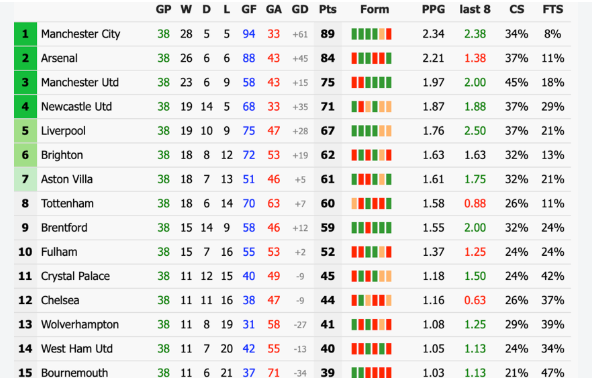
Football form tables are among the first things many fans and analysts check when trying to understand how teams are performing. A quick look at recent results can reveal whether a club is winning regularly, struggling to collect points or going through an impressive run. However, there is more to these tables than a simple collection of wins, draws and defeats.
One of the biggest mistakes football followers make is assuming that a team with several consecutive victories is automatically in excellent condition. Similarly, a club with a few defeats is not necessarily playing badly. The quality of the opposition, match circumstances, home and away performances, injuries and even the manner of previous results can completely change the picture.
Understanding how to interpret football form tables without being misled requires looking beyond the letters and numbers displayed beside each team's name. A form table should provide a starting point for analysis, not a final judgement about a team's strength. Knowing what to examine can help football followers recognise genuine improvement, identify misleading statistics and understand what recent performances really mean.
How To Interpret Football Form Tables Correctly
A form table should provide a starting point for analysis, not a final judgement about a team's strength. Knowing what to examine can help football followers recognise genuine improvement, identify misleading statistics and understand what recent performances really mean.
1. Understand What the Form Table Actually Shows
Most football form tables display a team's results from its last five or six matches. These results are commonly represented by letters:
- W: Win
- D: Draw
- L: Loss
For example, a team displaying W-W-D-W-L has collected three victories, one draw and one defeat from its last five matches.
At first glance, this looks like a respectable run. However, the letters do not explain how those results happened. They do not reveal whether the victories came against struggling opponents or whether the defeats involved narrow losses against some of the strongest sides in the competition.
A form table also does not automatically explain the quality of football a team has produced. A club might win several matches through late goals, defensive mistakes from opponents or fortunate circumstances.
Therefore, the first rule is simple: understand the results, but never allow them to tell the entire story.
2. Consider the Strength of Previous Opponents
Not every victory carries the same significance. Beating a team near the bottom of the league may be expected, while defeating a title contender away from home could represent a major achievement. This is why the quality of previous opponents matters when studying recent form.
Imagine two teams with identical records of four wins and one defeat. The first team achieved its victories against clubs occupying the bottom half of the table. The second defeated three top-six opponents and won another match against a difficult mid-table side.
Although their form records look identical, the circumstances surrounding their performances are very different. Examining previous opponents helps establish whether a team's impressive run reflects genuine strength or a favourable sequence of fixtures.
It is also important to consider how those opponents were performing at the time. A team that defeated a strong club several weeks ago may have faced an opponent that was struggling with injuries or suspensions.
3. Separate Home Form from Away Form
A team's overall form can sometimes hide significant differences between its home and away performances.
Some clubs are extremely difficult to beat in front of their supporters but become less convincing when playing away. Others are more comfortable using counterattacking football on the road and regularly collect points from difficult stadiums.
For example, a club might have won four of its last five matches. However, three victories could have come at home, while its only away victory was against a team near the bottom of the standings. This information becomes important when evaluating an upcoming fixture.
A team with excellent home form may face a different challenge when travelling to an opponent's stadium. Equally, a club with an inconsistent overall record might become much more competitive when playing on familiar ground.
Always compare a team's home and away records rather than relying exclusively on its general form sequence.
4. Look Beyond Wins and Examine Goal Statistics
Winning matches is important, but the number of goals scored and conceded can reveal additional information about a team's performance.
Consider a club that has won four consecutive matches, scoring five goals and conceding four. Another team has collected three victories, one draw and one defeat, scoring eleven goals and conceding only three.
The first team has more victories, but the second may have demonstrated greater attacking efficiency and defensive stability.
Important statistics to examine include:
- Goals scored: Shows how frequently a team finds the net.
- Goals conceded: Helps reveal defensive weaknesses.
- Goal difference: Indicates the balance between attacking and defensive output.
- Clean sheets: Shows how regularly a team prevents opponents from scoring.
- Scoring consistency: Reveals whether goals are coming regularly or in isolated performances.
These statistics provide useful context that ordinary form letters cannot communicate. However, even goal difference should not be interpreted without considering the opponents and match circumstances.
5. Pay Attention to the Number of Matches Played
Another common mistake is comparing teams without checking whether their form records cover the same number of matches.
Some form tables display the last five fixtures, while others provide information from six, eight or even ten games. Comparing different periods can create an inaccurate impression of which team is performing better.
A club that has won four of its last five matches should not automatically be considered stronger than one that has won six of its last eight. The longer period may provide a more balanced understanding of performance, particularly when a team's results have changed significantly in recent weeks.
It is also useful to check whether the displayed matches come from the same competition. Cup fixtures, league matches and European competitions can involve different opponents, tactical approaches and levels of pressure. Always establish the period covered before drawing conclusions from a form table.
6. Recognise the Influence of Injuries and Squad Changes
Football teams do not always maintain the same level of strength throughout a season. Injuries, suspensions, transfers and tactical changes can significantly influence their performances.
A club might have enjoyed five consecutive victories while its first-choice goalkeeper, central defenders and leading striker were available. However, several important players could become unavailable before its next fixture.
Using the previous results without considering these changes could produce an unrealistic assessment. The opposite can also happen. A team that has struggled recently might welcome back important players who were absent during its poor run.
Squad rotation is another factor worth considering. Clubs involved in several competitions sometimes rest key players, particularly when dealing with demanding fixture schedules. Recent form becomes more meaningful when it is examined alongside the current condition and availability of the squad.
7. Do Not Ignore the Manner of Each Result
Two victories can produce completely different impressions when their performances are examined closely.
A team might win 3-0 after dominating possession, creating several clear opportunities and controlling the match from beginning to end. Another might secure a 1-0 victory despite spending most of the game defending and allowing the opposition numerous chances.
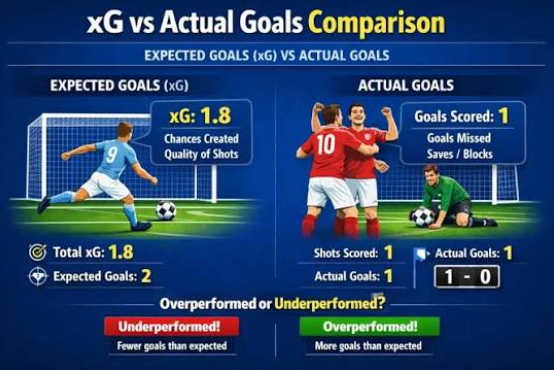
Both results count as wins, but they do not necessarily suggest the same level of performance. Statistics such as expected goals (xG), shots on target, possession, big chances created and defensive actions can help explain what happened during a match.
For instance, a team that repeatedly wins despite allowing numerous dangerous opportunities might be benefiting from excellent goalkeeping or poor finishing from opponents. That does not make its victories meaningless. However, it suggests that its results may be less sustainable if the underlying problems continue.
Looking at match reports and performance statistics helps reveal details that a basic form table cannot show.
8. Watch Out for Sudden Changes in Performance
Football form is rarely permanent. Teams can experience strong periods, unexpected downturns and gradual improvements throughout a season. A club that started the campaign poorly might have recently changed its manager, adjusted its formation or introduced younger players into the starting eleven.
Its earlier results may therefore have little connection with its current level of performance. Similarly, a team with an impressive form record might begin struggling because of fixture congestion, declining confidence or tactical weaknesses that opponents have discovered.
This makes it important to identify recent patterns rather than treating every result from the previous few months as equally relevant. Pay attention to whether performances are improving, declining or remaining consistent.
9. Avoid Treating Form Tables as Guaranteed Predictions
Perhaps the most important lesson is that football form tables cannot predict future results with certainty. A team that has won five consecutive matches can still lose its next game. A struggling club can suddenly produce an outstanding performance, particularly when facing a familiar rival or playing an important fixture.
Football contains unpredictable elements, including individual mistakes, refereeing decisions, injuries and unexpected tactical changes. Form tables should therefore be combined with other information, such as head-to-head records, team news, tactical matchups, fixture difficulty and current motivation.
The objective is not to find a statistic that guarantees an outcome. It is to develop a more balanced understanding of the teams involved.
Conclusion
Learning how to interpret football form tables without being misled is about developing the habit of asking better questions. Instead of looking only at consecutive wins and defeats, examine the quality of opponents, home and away performances, goal statistics, squad availability and the circumstances surrounding previous results.
A form table is useful because it provides a quick overview of recent performances. However, its real value becomes clearer when the information is supported by deeper analysis.
The next time you examine a team's recent form, do not stop at the letters beside its name. Look at what happened during those matches, understand the conditions behind the results and consider whether the same performance level is likely to continue. That is how football statistics become meaningful rather than misleading.





💬 Comments (0)
No comments yet. Be the first!
Leave a Comment