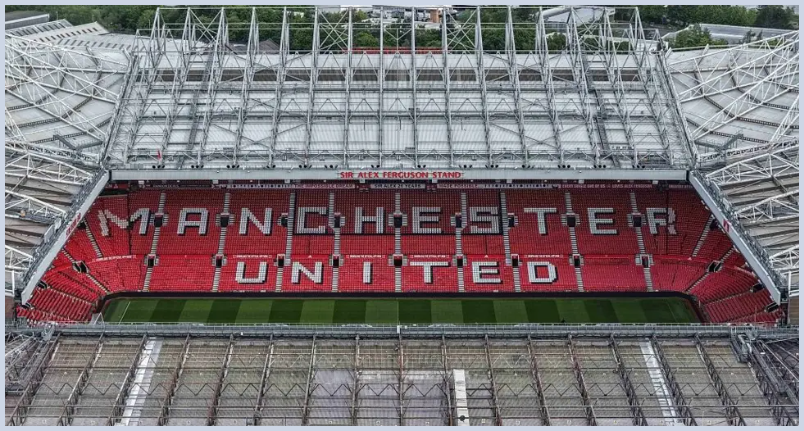
Manchester City Ruling Highlights Manchester United’s Growing Financial Burden
The financial ruling involving Manchester City has unintentionally drawn fresh attention to Manchester United’s own financial challenges.
A Premier League panel concluded that Manchester City’s reported income had been overstated by more than £830 million. The ruling stated that the club’s owners had channelled money into the organisation through sponsorship arrangements that should not have been recorded in that way.
The decision arrived just days after Manchester United filed detailed annual accounts with the New York Stock Exchange. Those figures showed that United paid £37 million in interest during the year ending June 30, 2026, up from £34 million the previous year.
Football finance analyst Swiss Ramble estimates that Manchester United’s total interest payments since the Glazer family’s leveraged takeover in 2005 have now reached approximately £852 million.
While the City case stands on its own and does not excuse any alleged wrongdoing, the contrast between the two Manchester clubs is striking. One ownership model has involved huge sums being invested into a club, while the other has resulted in a substantial amount of money leaving the club through interest payments.
United Promise Financial Discipline
Manchester United chief executive Omar Berrada insisted that the club were moving in the right direction but warned that financial discipline remained essential.
“While these results confirm that we are on the right trajectory, we will continue to take a disciplined approach to ensure our finances remain sustainable,” Berrada said.
United’s accounts contained some positive developments. The club finished third in the Premier League and secured a return to the Champions League after a two-year absence. Revenue reached a record £677.6 million, with projections suggesting it could rise to as much as £760 million during the 2026-27 financial year.
However, the same report revealed the scale of the financial commitments facing the club.
Manchester United confirmed that they had spent £191.7 million on players and related costs since June 30. The figure included deals involving Carlos Baleba, Andrey Santos and Youri Tielemans, as well as academy players such as England youth international Tynan Thompson.
The payments are scheduled to be made over the next five years. United also borrowed an additional £90 million, taking their total debt to approximately £1.15 billion.
Debt and Transfer Commitments Rise
The increase is considerable when compared with the £667 million recorded in accounts covering the year to June 2021.
Before June 30, United’s outstanding transfer debt stood at £375 million. Of that total, £218 million must be paid before June 30, 2027.
The club also revealed that another £122.8 million could become payable through performance-related clauses in existing contracts. Although those payments would likely reflect successful player performances, they still represent additional financial obligations.
United further increased their principal debt by $125 million, equivalent to approximately £94.36 million, during a restructuring process in June. On September 23, the club confirmed that £63.5 million had been spent acquiring land for a proposed new stadium.
The funding structure for the stadium has not yet been finalised. Some supporters, particularly those opposed to replacing Old Trafford, believe the money would have been better spent strengthening Michael Carrick’s squad.
The club’s leadership, however, continues to insist that it must balance investment with financial sustainability.
Wage Bill Remains Significant
Manchester United had the Premier League’s fifth-highest wage bill in 2025, at £313 million. That figure fell to £302 million in 2025-26, partly because the club did not participate in European competition.
No other clubs had released their full wage figures at the time of the report, but United’s fifth-place ranking was still notable. Their wage-to-turnover ratio stood at 45 per cent, the best figure recorded by any club during the previous season.
There is usually a broad connection between salary levels and sporting performance, although Manchester United have provided several exceptions. The club have frequently ranked among the Premier League’s biggest spenders on wages without matching that financial strength on the pitch.
In 2024-25, for example, United finished 15th despite having the league’s fifth-highest wage costs. Their third-place finish under Carrick therefore represented a significant improvement relative to their payroll.
Player Sales Remain a Weakness
United’s summer transfer spending was comparatively restrained. They spent around £148 million, less than several clubs, including newly promoted Ipswich and Hull.
However, their recent net spending remains high because the club have struggled to generate substantial income from player sales. When the latest transfer window closed on September 1, United had received only £47 million from outgoing transfers, placing them 11th in the Premier League.
Among the traditional “big six” clubs, only Liverpool generated less income from sales.
United have found it particularly difficult to command large fees for players. Since Romelu Lukaku joined Inter Milan for £74 million in 2019, the club have earned more than £25 million for an individual player only four times, through the sales of Mason Greenwood, Scott McTominay, Rasmus Højlund and Alejandro Garnacho.
This summer, United sold several young players for less than expected or released them without a major fee. Radek Vitek joined Middlesbrough and Toby Collyer moved to West Bromwich Albion, while defenders Tyler Fredricson and James Overy departed without significant transfer income.
However, many of those agreements included sell-on and buy-back clauses. The arrangement forms part of a broader strategy aimed at creating future value from academy graduates and young players.
Leverage Rules Arrive Too Late for Some
Premier League clubs voted in June 2023 to limit future leveraged buyouts to roughly 65 per cent of a club’s value. The measure appeared to follow concerns surrounding ALK Capital’s takeover of Burnley in 2020.
Many Manchester United supporters believe similar restrictions should have been introduced much earlier. The Glazer takeover in 2005 placed the club under a leveraged ownership structure, with supporters arguing that the resulting interest burden has limited United’s ability to reinvest.
The Manchester City ruling has therefore created an indirect comparison between two very different financial models. City’s case centres on alleged misrepresentation of income, while United’s concerns relate to debt, borrowing costs, transfer liabilities and the long-term impact of the leveraged takeover.
Champions League Qualification Is Crucial
United’s financial planning depends heavily on maintaining strong commercial and sporting performance. European success can produce a major difference in annual income.
The club earned £80 million from reaching the Champions League quarter-finals in 2017-18. By comparison, they received £31 million for reaching the Europa League final in 2024-25.
Their Adidas agreement also includes a £10 million annual reduction if United fail to qualify for the Champions League. That makes a return to Europe’s elite competition financially important as well as strategically valuable.
Berrada and his colleagues must now manage several competing demands:
- Controlling the wage bill and operating costs.
- Reducing outstanding transfer payments.
- Avoiding further reliance on revolving credit.
- Funding plans for a new stadium.
- Investing enough in the squad to remain competitive.
- Securing Champions League revenue.
United were scheduled to face Tottenham at Old Trafford on October 10 while sitting 12th in the Premier League table. Carrick’s immediate task is to improve that position, but the broader objective is clear: Champions League qualification will be central to Manchester United’s sporting and financial plans.






💬 Comments (0)
No comments yet. Be the first!
Leave a Comment