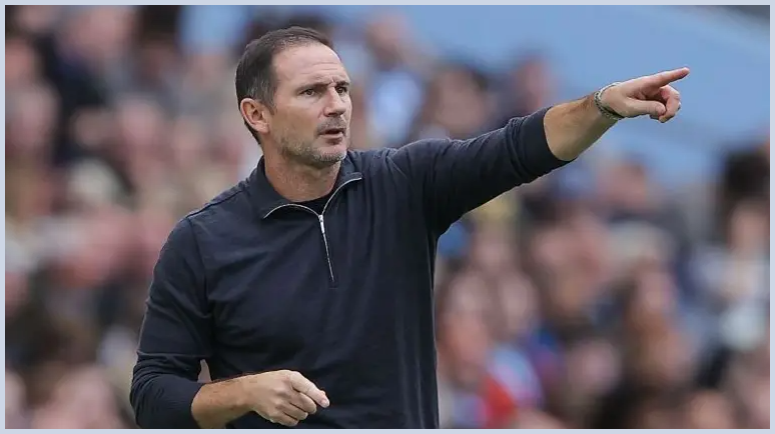
Commuting gaffer life: the real trade-offs of managing a football club from afar
Managing a football club is demanding under any circumstances: relentless pressure for results, impatient owners, critical fans and 24/7 media attention. For some head coaches, there is an added layer of complexity, running a team while living hundreds of miles from the training ground, splitting time between the club city and a family home elsewhere.
Recent examples include Frank Lampard, who commutes between Coventry City in the Midlands and London, and Arne Slot, who based himself in Hale, Greater Manchester, while his wife and children remained in the Netherlands during his tenure at Liverpool. Historically, Jose Mourinho maintained a London base while managing Manchester United, staying in a five-star hotel on matchweeks, and Tony Pulis famously kept his family home on the south coast while managing in Staffordshire and later Middlesbrough, logging round trips of 400+ miles at times.
So, what are the real pros and cons of long-distance management, and how do elite coaches make it sustainable?
The upside: protected focus, clearer thinking and family stability
1) Uninterrupted preparation time
For Pulis, the commute itself became a strategic advantage. “When I was at Stoke, I would drive home to the south coast after a game on the Saturday. It could take me three hours or more, but it was precious time because I could spend much of it on the phone and it is when I would start my preparation for our next match,” he told BBC Sport.
He used that window to debrief assistants David Kemp and Gerry Francis, then call his chief scout for a concise briefing on the next opponent’s shape, patterns, strengths, weaknesses and injuries. “By the time I arrived home… I would have my dinner on a tray in front of the TV while watching a recording of our opponent’s last game,” he said.
The key benefit? Solitude. “When you are in that car and you are by yourself, you have got time to think about everything… Whereas if you are in your office, you have got this and that going on. You might be involved in a really serious debate and then your chairman says he wants to speak to you, then you have to change all of that,” Pulis explained.
2) Emotional equilibrium and family support
Pulis emphasised that keeping his family settled on the south coast, where his wife wanted to raise their children, improved his capacity to work. “I never felt as if I was letting the club down by having my family home away from where the club was. I actually felt that without having the family there, I spent more time thinking about and preparing for what I was doing,” he said.
Clubs often supported the arrangement with high-quality accommodation during the week. “I had an apartment when I was at Stoke, which was lovely, I always stayed in nice places, which helped. It was always good because it meant wherever I was, my wife and children could come up and stay as well.”
3) A different perspective after matches
Leaving the stadium environment immediately after a game can help managers process events more objectively. Pulis noted that win or lose, he would ring his coaching team from the road to discuss finer details “away from the stadium to give us a different perspective.” That distance, he argued, reduced reactive decision-making and supported clearer planning for the next fixture.
The downsides: perception problems, logistics and the “detached” label
1) Public and media scrutiny
Living away from the club city can invite criticism, especially after poor results. During Arne Slot’s spell at Liverpool, his choice to reside in Greater Manchester, close to the airport for family travel to the Netherlands, was at times framed as a sign of detachment from the local fanbase. When results dipped, that narrative intensified, even though the arrangement was designed to stabilise family life and maintain focus.
2) Travel fatigue and scheduling pressure
Long drives or frequent flights add physical and mental load, particularly during congested fixture periods. While Pulis turned his Saturday-night drives into productive work blocks, he acknowledged the personal cost: “I did spend quite a lot of time away from home, my girls would probably tell you I spent more time working away than I should have.”
3) Risk of misalignment with club “DNA”
There is a persistent concern that a manager living elsewhere may not fully absorb a club’s culture or connect with supporters. Pulis rejected that notion, insisting he understood Stoke’s identity and built a team fans could identify with. “Having my family on the south coast didn’t stop me from understanding what the DNA of Stoke City Football Club was. I got to know the area and the fans,” he said.
How top coaches make it work: boundaries, routines and trust
- Be present during the week
Pulis was clear: remote management was never an option. “I would never have tried to do my job remotely. I felt as if I had to be there, taking care of training and everything else during the week.” The model is not absence; it is structured presence, full immersion Monday to Friday, with family time protected around matchdays.
- Build a trusted inner circle
Delegating effectively to assistants and scouts is essential when you cannot be everywhere at once. Pulis relied on Kemp, Francis and his chief scout to extend his eyes and ears, then synthesised their input during the commute.
- Communicate proactively with leadership
Transparency with chairmen and boards prevents misunderstandings. Pulis noted that his chairman, Peter Coates, would call after defeats but not after wins, a simple, trust-based rhythm that avoided unnecessary interference.
- Protect recovery and family time
Sustainability requires deliberate rest. For Pulis, Sundays were reserved for family before heading back up the motorway late Sunday night or early Monday morning, “with a clear view of what I believed was needed for our next game.”
Case studies: Lampard, Slot and the evolving norm
- Frank Lampard (Coventry City): Commutes between the Midlands and London while navigating a tough start in the Premier League with newly promoted Coventry. The arrangement mirrors his predecessors’ choices to prioritise family stability without compromising weekly presence at the training ground.
- Arne Slot (Liverpool): Lived in Hale, Greater Manchester, to be near Manchester Airport for regular trips to the Netherlands, where his family remained. The setup drew criticism during a difficult spell but was intended to balance elite demands with personal responsibilities.
- Tony Pulis (Stoke City, Middlesbrough): The archetype of long-distance management, logging 320–400+ mile round trips while maintaining strong results and dressing-room authority. His routine turned travel time into tactical preparation time.
Bottom line
Long-distance management is not about avoiding the club; it is about designing a routine that maximises focus, protects family stability and still delivers full-time presence during the working week. When executed well, with trusted staff, clear communication and disciplined boundaries, it can be a net positive for performance. But it demands resilience, because the moment results slip, the narrative can shift from “smart compromise” to “detached manager” in an instant.






💬 Comments (0)
No comments yet. Be the first!
Leave a Comment